Proverbs 1:7 (KJV)

“The fear of the LORD is the beginning of knowledge: but fools despise wisdom and instruction.” Read more here. Introduction Proverbs 1:7 highlights the foundational principle that reverence for the Lord is the starting point of true knowledge. It contrasts the wise, who seek understanding, with fools, who reject wisdom and instruction. Interpretation This verse … Read more
Proverbs 1:5-6 (KJV)

“[5] A wise man will hear, and will increase learning; and a man of understanding shall attain unto wise counsels: [6] To understand a proverb, and the interpretation; the words of the wise, and their dark sayings.” Read more here. Introduction Proverbs 1:5-6 emphasizes the value of wisdom and understanding, highlighting the importance of learning … Read more

Etymology of the Word “Understanding”

Contextual Usage The word “understanding” comes from the Old English “understandan,” which means “to comprehend” or “to grasp the idea of.” It combines “under,” used in the sense of “among” or “between,” and “standan,” meaning “to stand.” Thus, “understanding” originally conveyed the idea of standing in the midst of or among something to grasp its … Read more

Etymology of the Word “Wisdom”

Contextual Usage The word “wisdom” in English derives from the Old English “wīsdōm,” which is a compound of “wīs” (wise) and the suffix “-dōm” (state or condition). It is rooted in the Proto-Germanic “*wis-” meaning “to know.” Historical Usage Modern Usage Across Disciplines Cultural Perspectives Wisdom in Modern Context Today, “wisdom” encompasses not just knowledge … Read more

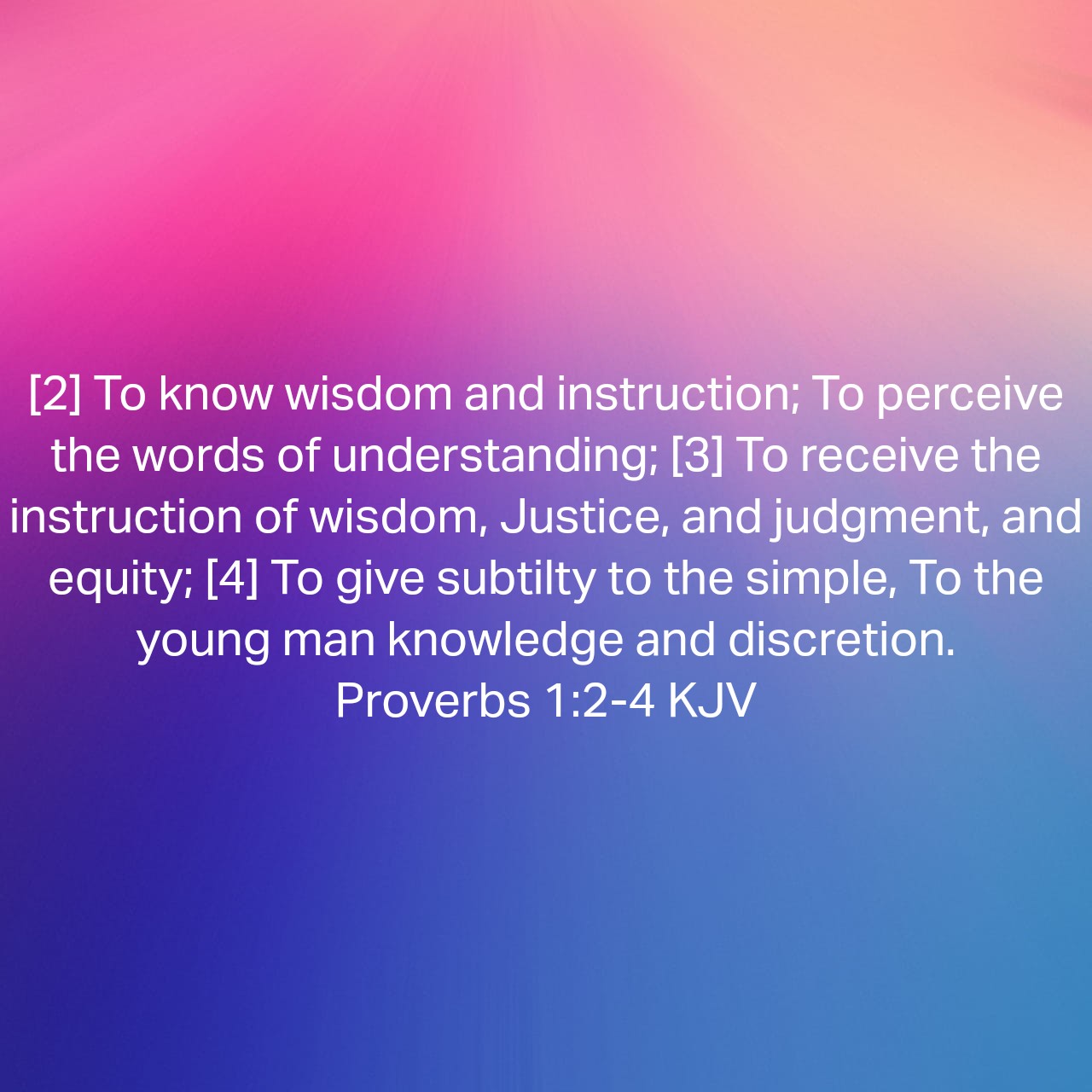
Proverbs 1:2-4 (KJV)

“[2] To know wisdom and instruction; to perceive the words of understanding; [3] To receive the instruction of wisdom, justice, and judgment, and equity; [4] To give subtilty to the simple, to the young man knowledge and discretion.” Read more here. Introduction Proverbs 1:2-4 introduces the purpose of the Book of Proverbs, outlining its goals … Read more

Genesis 1:4 (KJV)

“And God saw the light, that it was good: and God divided the light from the darkness.” Read more here. Introduction Genesis 1:4 continues the creation narrative, describing God’s evaluation and separation of light from darkness. Interpretation This verse indicates God’s approval of the light He created, deeming it “good.” It also signifies the establishment … Read more

Genesis 1:3 (KJV)

“And God said, Let there be light: and there was light.” Read more here. Introduction Genesis 1:3 marks a pivotal moment in the biblical creation narrative, where God initiates the creation of light, bringing illumination into the previously dark and formless world. Interpretation This verse highlights God’s creative power through His spoken word. The command, … Read more

Etymology of the Word “Genesis”

Contextual Usage “Genesis” comes from the Greek word “γένεσις” (genesis), meaning “origin” or “creation.” This term was used in the Septuagint, the Greek translation of the Hebrew Bible, to name the first book, which recounts the creation of the world. The Hebrew equivalent is “בְּרֵאשִׁית” (Bereshit), meaning “in the beginning.” Historical Usage Modern Usage Across … Read more

Genesis 1:2 (KJV)

“And the earth was without form, and void; and darkness was upon the face of the deep. And the Spirit of God moved upon the face of the waters.” Read more here. Introduction Genesis 1:2 continues the biblical account of creation, describing the initial condition of the earth before it was shaped and filled. Interpretation … Read more

Genesis 1:1 (KJV)

“In the beginning God created the heaven and the earth.” Read more here. Introduction Genesis 1:1 is the inaugural verse of the Bible, heralding the commencement of the creation story and laying the foundation for the entire biblical narrative. Interpretation This verse underscores God’s ultimate authority and creative power, establishing Him as the originator of … Read more